Tracy’s position along the I-580 and I-205 corridors has made it one of Northern California’s busiest e-commerce and logistics centers, and that concentration of warehouse work changes how CPR certification questions typically come up here. Some employees need BLS (Basic Life Support) because of a designated safety role, while most warehouse staff are better matched to standard CPR and First Aid training tied to general workplace safety expectations. This guide explains which certification applies to which role, what a class actually involves, and how to fit training around rotating warehouse shifts without losing a full day off.
Key Takeaway
Warehouse and logistics employees in Tracy typically need standard CPR and First Aid training unless they hold a designated safety, security, or on-site medical role, in which case BLS certification is more likely to apply. Confirming this with your employer’s safety office before registering is the most reliable way to book the right course.
Why CPR Readiness Matters in a Warehouse and Logistics Environment
Large fulfillment centers and distribution facilities typically maintain workplace safety programs that address injury response, and CPR or First Aid readiness is often part of that broader plan. Federal workplace safety regulations generally expect employers to have a way to provide prompt medical response when a hospital or clinic isn’t nearby, though the exact training requirement depends on the facility and its specific safety policy rather than a single universal rule.
Because warehouse environments involve equipment, foot traffic, and physically demanding work, many employers choose to certify designated staff in CPR or BLS as part of their injury-response plan. If your facility has assigned safety captains, security staff, or an on-site medical station, those roles are the ones most likely to require certification, though policies vary by employer.
BLS or Standard CPR? Matching the Course to Your Role
BLS is the American Heart Association course built for people who may respond to cardiac or breathing emergencies in a clinical or formally designated workplace-response role. It includes AED use, airway management, and coordinated response as part of a resuscitation team, along with a supervised skills test rather than an online-only completion.
Standard CPR and First Aid training covers the same core rescue skills — compressions, rescue breaths, AED use, and choking response — along with basic first aid for common workplace injuries. It’s built for general employees rather than clinical or formally designated responder roles. Most warehouse associates, pickers, and packers fit this category, while safety officers, on-site medical staff, and some security personnel are more likely to need BLS specifically. If your job offer or safety handbook doesn’t spell this out, asking your safety coordinator directly avoids guesswork.
What Happens During the Class
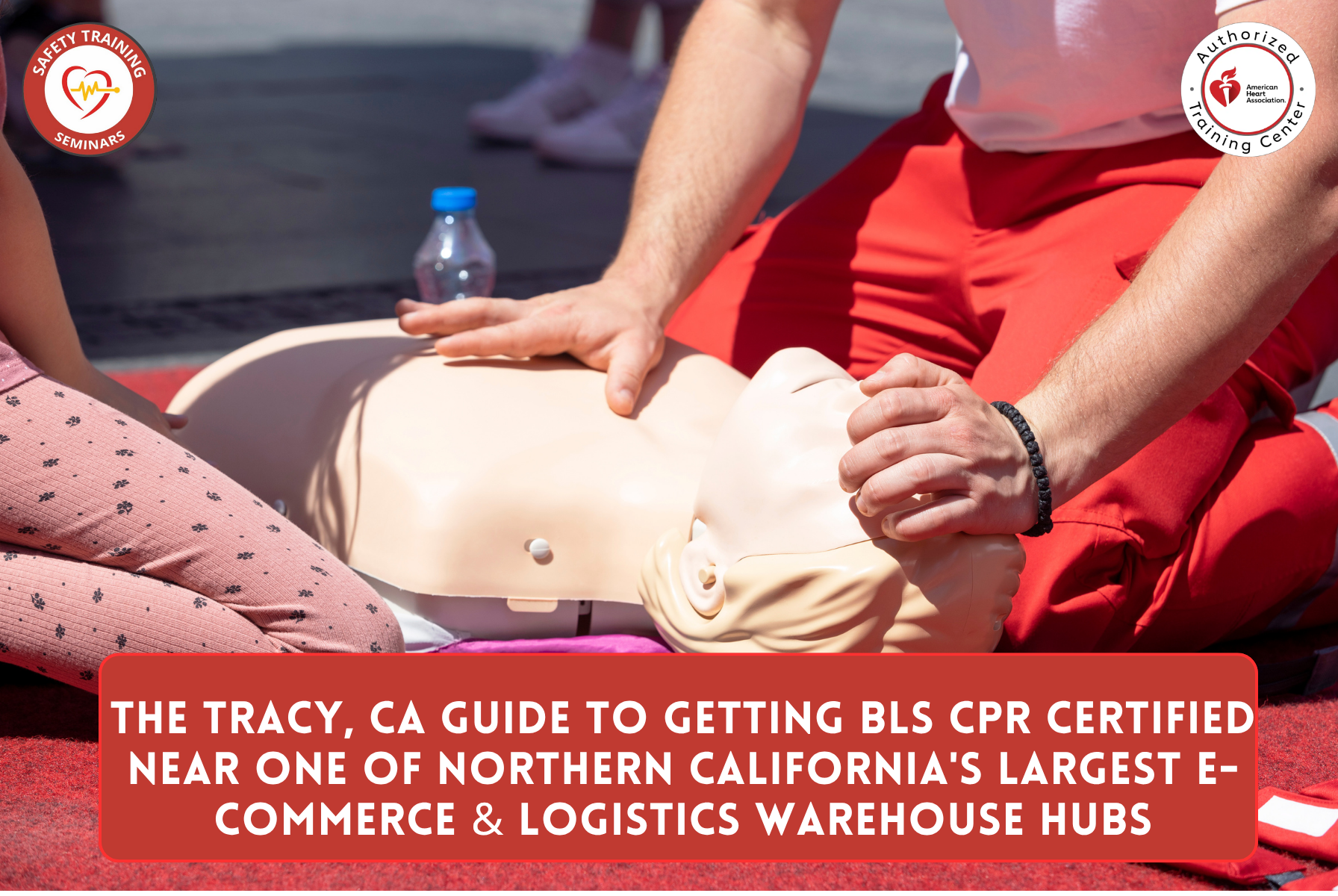
Both BLS and standard CPR courses combine instruction with hands-on skills practice on a manikin, followed by an instructor-evaluated skills test. You’ll demonstrate chest compressions, rescue breaths, and AED use, along with choking-response techniques.
BLS additionally covers team-based resuscitation scenarios relevant to coordinated emergency response, which is one reason a fully online-only certificate typically isn’t accepted for BLS purposes. Standard CPR and First Aid classes are generally shorter and don’t include this team-response component, since they’re designed for general workplace readiness rather than clinical-level care.
Scheduling Training Around Warehouse Shift Work
Rotating shifts, overnight schedules, and mandatory overtime are common in logistics work, which makes scheduling a real factor in choosing a course format.
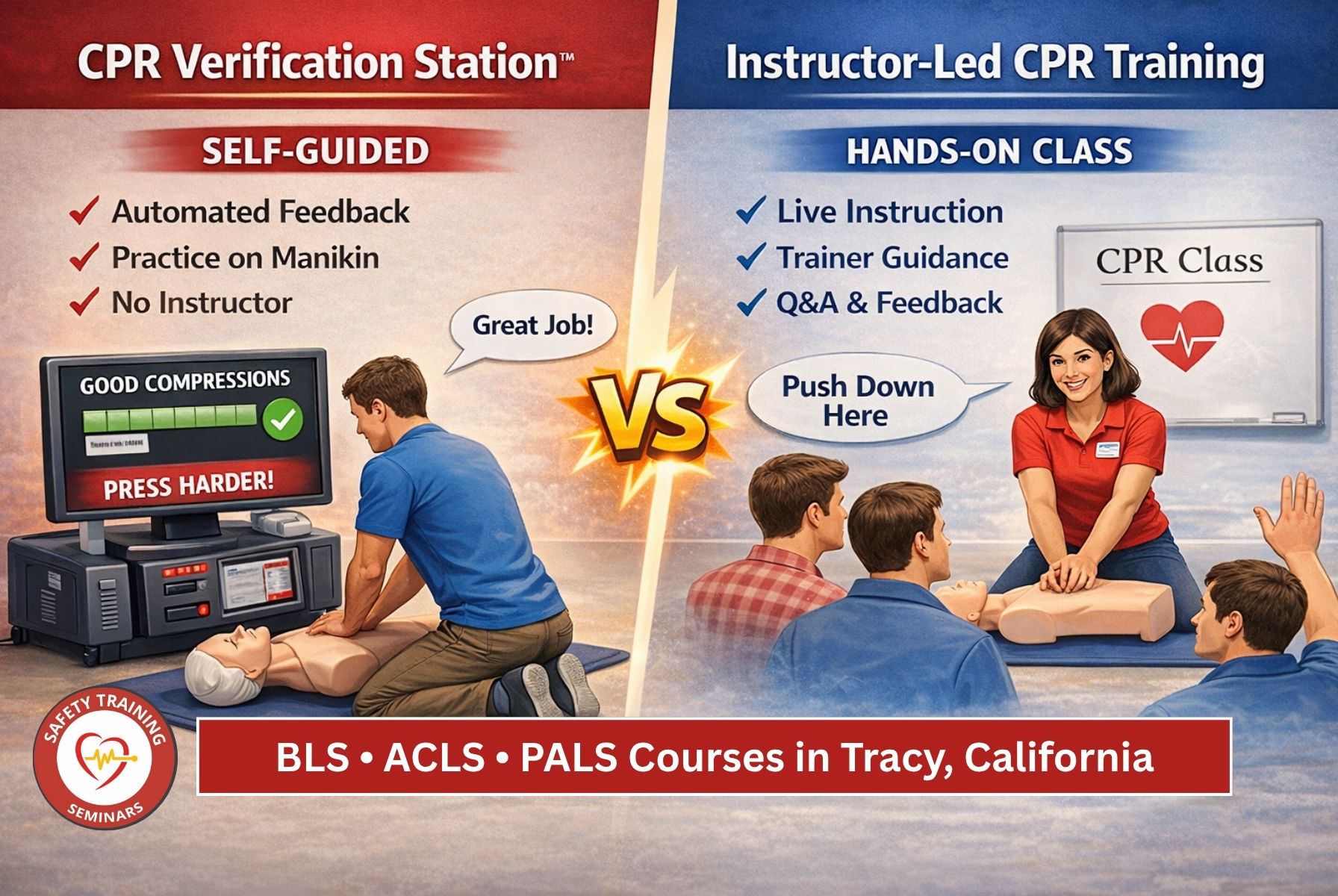
- Blended format: Complete the knowledge portion online at your own pace, then attend a shorter in-person session for the skills test. This tends to work well for employees who can’t commit to a full daytime class block.
- Traditional in-person course: Instruction and testing happen in one sitting, which suits anyone who prefers to finish everything at once rather than splitting the process across two steps.
Both formats result in the same certification once the skills evaluation is complete, so the better option usually depends on which shift pattern you’re working that month.
Certification Length and Employer Renewal Expectations
AHA BLS certification is generally valid for two years from the date of completion, and standard CPR certifications often follow a similar timeframe, though this can vary by training provider. After that period, renewal typically involves a shorter refresher course rather than repeating the full class.
Warehouse employers sometimes set their own internal renewal deadlines ahead of the official expiration date, particularly for safety-designated staff, so checking with your facility’s safety office is worth doing rather than relying only on the date printed on your card.
Serving Tracy’s Warehouse Corridor and the Surrounding Valley
Tracy’s logistics workforce often includes employees commuting from across the Central Valley, since warehouse hiring in this corridor draws from a wide radius rather than just the city itself. Workers traveling in from Manteca or Lathrop sometimes prefer scheduling a class closer to home rather than adding extra driving time onto an already long shift, especially with rotating schedules that don’t leave much flexibility.
The same is true for employees commuting from Mountain House or Ripon, where a shorter local option can make the difference between attending training and postponing it another month. Understanding whether your role calls for BLS or standard CPR before comparing nearby classes helps you avoid booking a course your employer won’t accept.
Where to Complete BLS or CPR Training Near Tracy
Safety Training Seminars operates a training center in Tracy, located at 902 N Central Ave, Suite 219, Tracy, CA 95376, offering BLS certification for safety-designated roles along with general CPR and First Aid classes for the broader warehouse and logistics workforce. Reviewing which course applies to your specific role before registering helps you avoid attending the wrong class.
Employees commuting from further into the valley may find the Stockton CPR and BLS class page or the Lodi CPR and BLS class page useful for checking scheduling closer to those areas. Confirming your required certification type first makes it easier to choose the right page and format.
Frequently Asked Questions
Do all warehouse employees in Tracy need BLS certification? No. Most general warehouse associates, pickers, and packers are better matched to standard CPR and First Aid training rather than BLS. BLS is more commonly required for designated safety officers, on-site medical staff, or formally assigned emergency responders. Checking your facility’s safety handbook is the most reliable way to confirm which applies to your role.
Can CPR or BLS certification be completed entirely online for a warehouse job? Generally, no. Both certifications require a supervised skills test where an instructor evaluates your compressions, rescue breaths, and AED use directly, either in person or through a live-supervised session. A fully self-paced online course without this component typically isn’t accepted for either certification.
How long does a CPR or BLS class take for someone working rotating shifts? Timing varies by format and training provider, so it’s best to confirm exact details when you register. A blended format, where the knowledge portion is completed online beforehand, generally involves a shorter in-person session than a full classroom course, which can help around unpredictable shift schedules.
Are CPR and BLS classes available outside Tracy for employees commuting from nearby cities? Yes. Many logistics employees commute from communities like Manteca, Lathrop, or Stockton, and some prefer scheduling a class closer to home or along their commute route. Checking nearby course-location pages directly is the most reliable way to confirm current availability in a specific area.
How long is BLS certification valid once completed? AHA BLS certification is generally valid for two years from the completion date. Some employers, particularly those with designated safety roles, set internal renewal deadlines earlier than the official expiration, so confirming your facility’s specific policy is worth doing rather than relying solely on the card date.
Deciding on the Right Course Before You Register
The most useful step before booking a class is confirming whether your warehouse role calls for BLS or standard CPR and First Aid, since employer safety policies in Tracy’s logistics corridor vary by position rather than applying uniformly across a facility. From there, choosing between an in-person or blended format usually comes down to your current shift rotation. Safety Training Seminars’ Tracy location offers both course types, and reviewing the details for your specific situation before enrolling helps make sure the class you attend is one your employer will actually accept.